

- December 22, 2025
- info@maptoppers.com
- 0
Best Tankless Water Heaters for Colorado Cabins
Best Tankless Water Heaters for Colorado Cabins
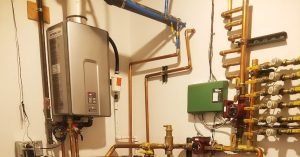
When you’re living or staying at elevation, “best tankless water heaters Colorado” means something different than what a big-box store in Denver might sell.
At Sinrom Construction, we’ve been in enough crawlspaces and pump rooms to know not every “top-rated” unit survives a Rocky Mountain winter. Here’s what actually works when your driveway turns into a snow tunnel.
Why Most Tankless Heaters Don’t Cut It Up Here
The average tankless water heater for cabins isn’t designed for this environment. That’s why you’ve got to be picky or prepared to replace it.
We’ve replaced enough frozen systems to say this plainly: if you’re shopping for a tankless water heater for cabins, ignore glossy online reviews and focus on high-altitude water heater considerations instead.
Models that fail often lack freeze protection or proper altitude settings. And in Colorado, one cold snap is all it takes to split a pipe or trip a system that wasn’t ready.
What We Recommend (Based on Jobs We’ve Done Before)
When buying a tankless water heater in Colorado, you have to focus not on the sleekest or most high-tech, but rather on the ones that keep working when the propane gets low, the power flickers, and the wind chill hits -20°F.
For most cabins, propane tankless water heaters are the go-to.
They’re efficient, reliable, and don’t rely on the grid, which is a big deal when the grid doesn’t reach your driveway.
We typically choose models rated for high-altitude performance, with outputs strong enough to handle multiple fixtures and flow rates above 6 GPM.
A key feature we won’t compromise on? Freeze protection for tankless water heaters.
Built-in heating elements and automatic drain functions can mean the difference between a fully functional cabin and thousands in damage when the temps plunge.
How to Choose a Tankless Water Heater for a Cabin
- Go propane if you’re off-grid.
- Look for altitude ratings over 9,000 ft.
- Make freeze protection non-negotiable.
- Avoid models that require frequent filter maintenance or software resets.
What Actually Works Up Here
Wondering about a tankless water heater vs. a traditional heater for cold climates? We’ve worked with both, and tankless wins every time… if it’s built for Colorado.
Traditional tanks lose heat fast, take up space, and freeze easily if the power cuts out. Tankless systems heat water on demand and save energy, as long as you choose one with proper freeze protection.
Between electric and gas tankless water heaters, we always recommend gas, usually propane.
Electric models struggle with cold groundwater and can overload off-grid systems. Propane heats faster, works off-grid, and keeps running when the snow piles up.
If your cabin’s up high and far out, skip the guesswork. Go gas, go tankless—and go with something that’s proven itself above 8,000 feet.

What Works in Town Doesn’t Always Work in the Mountains
Here’s the takeaway: not every heater survives a Colorado winter, and the higher you go, the fewer options you’ve got.
At Sinrom Construction we know that because we’ve been up there, fixing the ones that didn’t make it.
Need help choosing and installing the right system? Let’s talk! Call us at 970.389.2501 or reach out online. We’ll make sure your cabin’s tankless water heater is built to outlast the storm.
FAQ's
Do you install both electric and gas tankless water heaters?
Yes, we install both! Whether your cabin runs on grid power or propane, we’ve got the tools and experience to set it up right.
What areas do you service for tankless water heater installations?
We work across Colorado’s mountain communities, including Evergreen, Conifer, Bailey, Jefferson, and Park County. If your cabin’s off the beaten path, we’ve probably been there already.
How long have you been installing tankless systems in the mountains?
We’ve been doing this for over a decade. When we say we install the best tankless water heaters Colorado cabins need, we’re speaking from hard-earned experience. Still not sure? See more about us here.
How often should I flush or maintain a tankless water heater?
Once a year is ideal, especially if your water has high mineral content. A quick flush keeps things efficient and extends the life of your system.
Are there any unique considerations for vacation rentals or part-time cabins?
Definitely. If your place sits empty for long stretches, you’ll want timed recirculation, smart freeze control, and maybe remote monitoring. We can help design a system that stays safe even when you’re not there.